

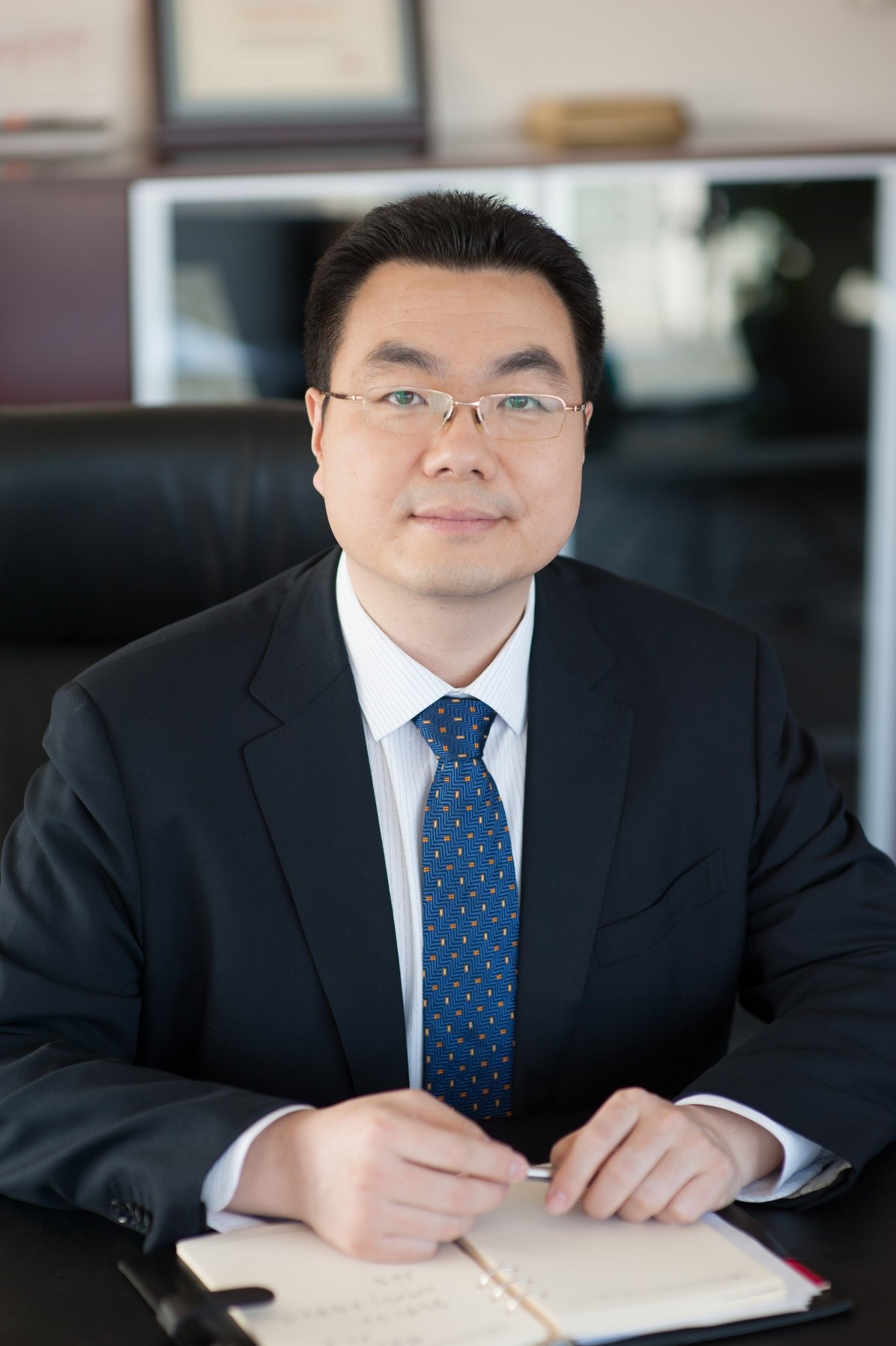
Xu Yafeng, President of WINS Investment
Zhang Wenjing, Leju Finance, transmitted from Shanghai
In the long run, this must be a good thing. China's capital market has begun to have equity REITs products." A few days ago, Xu Yafeng, President of WINS Investment, expressed his expectations for the future development of REITs when interviewed by Leju Finance.
Although the current pilot work of REITs is limited to the field of infrastructure, it has been regarded by the market as a milestone event. The market has been calling for the launch of the Chinese version of REITs (real estate investment trusts) for a long time. At the end of April this year, China Securities Regulatory Commission and National Development and Reform Commission jointly promulgated the "Circular on Promoting the Pilot Work of Real Estate Investment Trusts (REITs) in the Infrastructure Sector", officially launching infrastructure REITs. On August 7 this year, China Securities Regulatory Commission promulgated the "Guidelines for Public Offering of Infrastructure Securities Investment Funds (Trial)" (hereinafter referred to as the "Guidelines"), which came into force on the date of its publication. China has taken a crucial step forward in the public offering of REITs.
WINS Investment, as a professional institution of real estate investment under Gemdale Group, has been exploring the field of real estate finance since 2006, and has so far become an alternative investment institution focusing on investment management in domestic and foreign real estate markets. In recent years, WINS Investment has been exploring the financial innovation of real estate.
In terms of urban renewal, WINS Investment focuses on investment opportunities in the offices, industrial parks, community businesses and long-term rental apartments in first-tier cities and new first-tier cities where the new economy is relatively developed.
In 2019, WINS Investment led the acquisition of the project of Shanghai Kangjian Plaza, which is a community-based business. It is understood that the project is located in Xuhui District, the CBD of Shanghai. It enjoys a high-quality base of regional consumption and educational resources, surrounded by schools, and has great demand potential and value enhancement space in education and entertainment. Through renovation and upgrading and resource integration, WINS Investment has built Kangjian Plaza into a community-based shopping mall with the theme of children's education, leisure and entertainment.
According to the introduction of Xu Yafeng, such a community-based business with demand potential and value enhancement space is also a business format that WINS focuses on. In the future, WINS will make it into an asset package and create greater value through capital operation and asset management.
In terms of asset securitization, in 2016, WINS Investment cooperated with Gemdale Properties & Investment to participate in the investment of the “No. 8 Bridge” project in Shanghai. In August 2017, it cooperated with Harvest Capital to successfully issue the "Special Asset-backed Project of Harvest Gemdale No. 8 Bridge" on Shanghai Stock Exchange. WINS Investment served as the transaction consultant and general coordinator of the project.
As the first asset-light securitization product in the history of domestic ABS in cultural and creative parks, this project has realized the product model of the unsecured reasonable financing scale of the “asset-light” type. Furthermore, by carrying out sufficient and objective analysis at the level of underlying assets and fully matching itself with the interest principal coverage requirements of financial products, this project has laid a solid foundation of technical experience for the independent issuance of similar asset-light ABS in the future. So far, Shanghai No. 8 Bridge Creative Park has become a representative creative park in Shanghai, and it is also one of WINS's most successful investment cases in the field of the financial innovation of real estate.
On March 19, 2020, the "Gemdale Strongberry Public Offering ABS Phase 1" with WINS Investment as the general coordinator and transaction consultant was successfully issued on Shanghai Stock Exchange, with a shelf scale of RMB 2 billion yuan. This is the first asset securitization product of "asset-light urban renewal" of long-term rental apartments on Shanghai Stock Exchange. WINS Investment carried out in-depth research and exploration and reasonable design in such aspects as the early selection and engagement of the tripartite agency, the demonstration of transaction and product structure, the screening of pooled assets and the determination of issuance scale, and contributed to the Phase 1 oversubscription in the issuance work, together with the Capital Management Department of Gemdale Group, Gemdale Properties & Investment and China Capital, and with the cooperation of the operation and management team of Gemdale Strongberry.
In the opinion of WINS Investment, the further implementation of innovative financial products of real estate asset securitization, especially REITs, will help establish and standardize a robust and sound market of investment and asset management, and will also have a very positive significance to promote the renewal and transformation of cities, the development of new business-format products and the upgrading of consumer service.
Xu Yafeng mentioned during the interview that there were more debt financing real estate companies and less equity capital in the previous capital market, which led to excessive industry leverage. This trial of REITs in the field of infrastructure is considered to be of great significance because REITs products are equity ones, having completely changed the previous financing model.
"However, since the current pilot work of REITs is limited to the infrastructure field, it will not have direct significance for real estate companies in the short run." However, Xu Yafeng believes that logistics warehousing and industrial parks have been allowed to serve as pilot projects, and they are expected to expand to larger areas in the future.
The following is the content of the dialogue between Leju Finance and Xu Yafeng (selected):
Reporter: This year, the pilot work of public offering of REITs in the field of infrastructure has officially started. Will it have an impact on the real estate market?
Xu Yafeng:This must be a good thing in the long run. China's capital market has begun to have equity REITs products. First, we started to break the ice in the field of infrastructure, which is also consistent with the national policy to support infrastructure construction.
In fact, the real estate category is relatively large. In addition to the residential development projects we often talk about, there are offices, industrial parks, apartments, and so on. In the long run, I think these assets can also move towards REITs in the future. Moreover, at the end of April, in the "Circular on Promoting the Pilot Work of Real Estate Investment Trusts (REITs) in the Infrastructure Sector" jointly promulgated by China Securities Regulatory Commission and National Development and Reform Commission, logistics warehousing, industrial parks, and other areas closely related to economic development have also been included in the pilot work.
Therefore, I think this is a more favorable direction as a whole. At present, REITs are still in the initial and pilot stage. At least industrial parks are allowed to serve as pilot projects. In the long run, can the pilot work be expanded to a larger scale? I think it is worth our expectation.
Reporter: You have been paying attention to REITs and asset securitization. What significance can this have for real estate investment and corporate financing?
Xu Yafeng: Asset securitization is a broad scope that includes debt and equity products. Of course, the most important product form in the world is REITs. In fact, there is not only the form of debt financing. Real estate companies used to finance themselves through bank loans, trust financing and CMBS and ABS issuance, all of which fall into the category of debt financing. At present, the capital market has less equity capital and more debt financing, resulting in excessive industry leverage.
This pilot work of REITs in the field of infrastructure is considered to be of great significance, because its products are equity-based, which is equivalent to the transfer-out of equity. This has completely changed the previous debt financing model. Of course, the current pilot work is limited to the field of infrastructure and will not have direct significance for real estate companies in the short run.
However, at present, real estate companies can also consider transferring some of their equity to some large institutions. We are also looking at this type of holding assets, because in our long-term plan, a batch of assets held can be packaged for securitization, which is our investment strategy. In addition, there are insurance assets. They may also need to hold some stable assets to maintain long-term income.
In addition, with regard to operating development projects, I don’t think we must invest in a single project. If the size of a single project is very large, we will face greater pressure by relying on our own funds and financing, so joint investment can be made to give full play to the strengths of each.
Reporter: What are the new trends in the field of real estate investment and financing this year?
Xu Yafeng:There are rapid changes this year.
During the epidemic, the national monetary policy has been relaxed to a certain extent, and some financing products have been reopened. Since May and June this year, whether it is real estate investment or land acquisition, the recovery has been relatively fast, even a bit too fast.
In July, many policies and restrictive measures were issued across China to resume control. I think this is right. We shouldn't let real estate quickly become an investment product. Adhering to the principle of "no speculation on housing" and supporting consumers with rigid needs is conducive to the long-term development of the real estate market.
Reporter: You have put a lot of energy on the stock market. You once said, "In the stock era of real estate, institutional investors have the final say." How do you understand this sentence?
Xu Yafeng:For example, some urban renewal projects we are now investing in usually need to be held for operation. Before stable operation, that is, during the investment period, or the construction period or the renovation period, project operations are unstable and risky. There are uncertainties in various links, such as whether the cost of renovation can be controlled, whether the projects can be approved, and whether we can achieve the expected price by attracting investors for operation. And this year’s epidemic is more likely to have a huge impact on the projects.
In this stage, the professional requirements for investors are higher, which involve land acquisition, development, planning, leasing, operation, etc., which involve rich experience and judgment. Therefore, the projects are not suitable for investment by individual investors, but more suitable for professional institutional investors. First, professional institutional investors have sufficient professional capabilities, and second, professional institutional investors have relatively higher risk tolerance.
Reporter: What are the opportunities for real estate investors in the era of "no speculation on housing"?
Xu Yafeng: In terms of development business, there is no set standard. In fact, there is still housing demand. Of course, with the gradual satisfaction of the housing demand of the Chinese population, the total volume will be adjusted. Judging from the current trend, the differentiation of real estate companies is obvious. Large-scale developers with stronger financial power, development capabilities, and brand effects will continue to grow, while small and medium-sized developers will shift their business formats or cooperate with larger institutions.
For our investment institutions, in the process of industrial upgrading, logistics demand will increase, and logistics real estate will be a good sector in the future.
The industrial park is also a sector where we are emphatically distributing. We will also look at some office and apartment projects. There are also some more alternatives, such as retirement, medical care, etc. We will also investigate and consider opportunistically in connection with the strategy of the entire Gemdale Group.
There is another opportunity in the field of urban renewal. In the past, the model of large-scale new district construction was continuous extension and expansion, but the current urban renewal involves the transformation of old buildings, and even "urban reconstruction" or "old city renovation". Urban renewal projects can release more land instead of simply expanding outward. This is also the area we may focus on.
Reporter: Affected by the epidemic this year, many real estate companies are in cash flow difficulties. For them, how can they revitalize their assets and ensure sufficient cash flow?
Xu Yafeng:In the first half of the year, many companies are under heavy financial pressure. For companies involved in real estate investment:
First, their investment should not be too aggressive. I think they must first control the investment, because this is almost the largest capital expenditure item. They should look at this market calmly and objectively and control the pace of investment;
Second, they should do a good job in the operation and management of existing projects;
Third, for some long-term holding assets, some exit methods should be considered. Whether it is looking for a large institution to take over, or issuing REITs products within the scope of the policies, it will have a certain effect on the improvement of corporate cash flow and balance sheet.
Reporter: WINS Investment led the Shanghai “No. 8 Bridge” project and achieved success in this regard a number of years ago. At present, WINS Investment is still focusing on the layout of industrial parks. What is your investment logic?
Xu Yafeng:Yes, we have recently invested in Phase 5 the No. 8 Bridge project. In addition, we have also invested in some commercial projects. For example, in 2019, WINS Investment led the acquisition of the Shanghai Kangjian Plaza project, which is a community-based business. The project is located in Xuhui District, the CBD of Shanghai. It enjoys a high-quality base of regional consumption and educational resources, surrounded by schools, and has great demand potential and value enhancement space in education and entertainment. Through renovation and upgrading and resource integration, WINS Investment has built Kangjian Plaza into a community-based shopping mall with the theme of children's education, leisure and entertainment. Such a community-based business with demand potential and value enhancement space is also a business format that WINS focuses on. In the future, WINS will make it into an asset package and create greater value through capital operation and asset management. In addition, we have invested in an industrial park in Hangzhou.
In this type of investment, the core logic is the same. We will conversely calculate the return of today's investment according to the capitalization rate at the time of exit in a relatively mature state in the future. Strategically, we will adopt "PE+REITs two-wheel drive". The long-term goal is to carry out asset securitization. And at present, when asset securitization has not yet been carried out, we will still use part of our own funds and early private equity funds to invest in this stage of early development, transformation, and upgrading.

